Thailand's gain form BRICS


Thailand
31/5/2024
Thailand will apply to become a member of the BRICS economic bloc. This follows a decision by the Thai Cabinet, who on Tuesday (May 28) approved the text of the official letter expressing Thailand’s intent to join BRICS. It remains to be seen whether the BRICS Summit, which will be hosted by Russia in October this year, will give a blessing for Thailand to become its member.
Given Thailand’s strategic location in Southeast Asia and its role as a powerhouse in the region where intense superpower rivalry for domination is looming in the backdrop, it is likely that the BRICS leaders will give a go-ahead nod for Thailand to join the bloc.
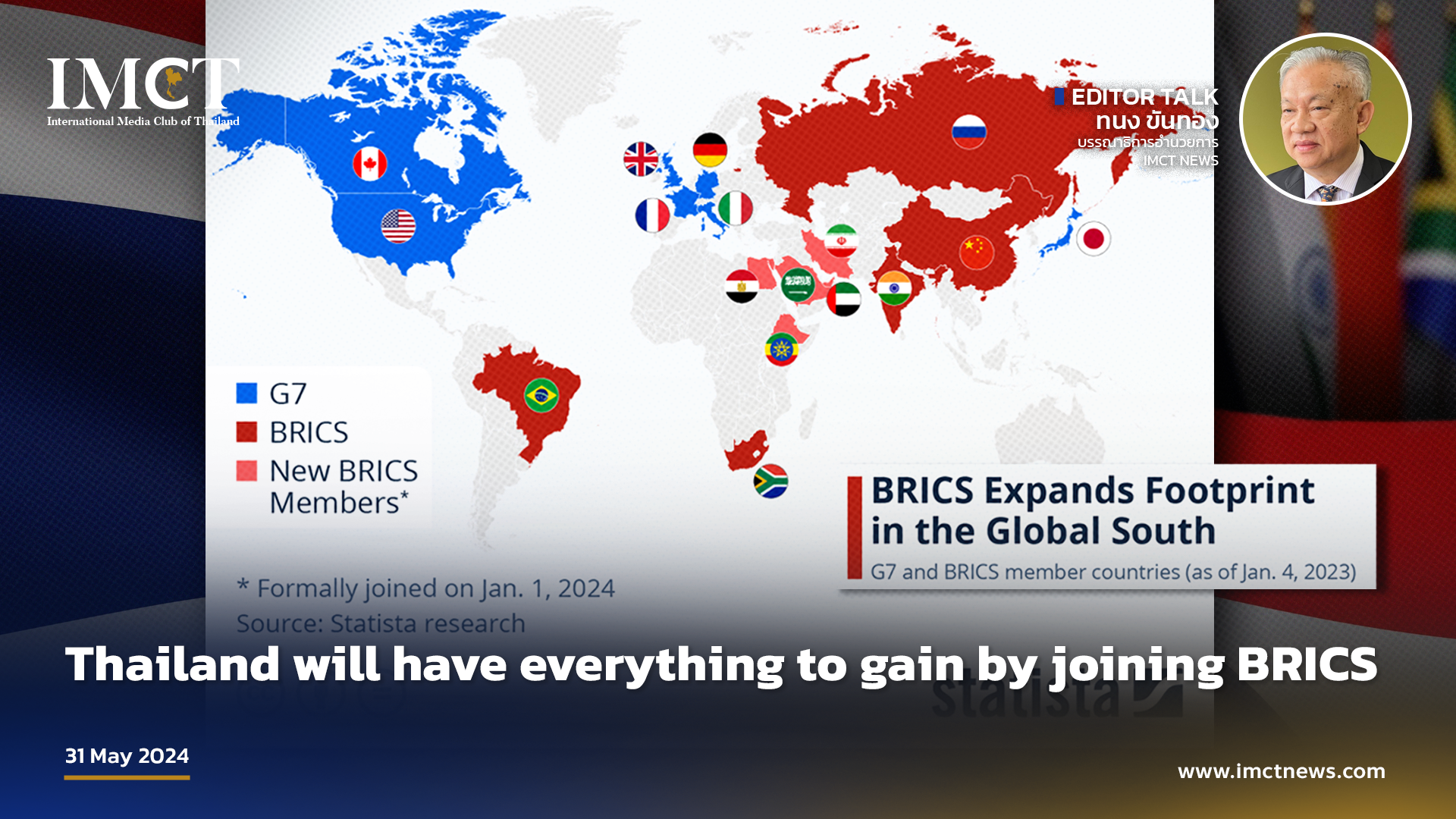
By seeking a BRICS membership, Thailand is embarking on a bold foreign policy move to embrace a multi-polar world order. BRICS aims to establish a new global economic and financial order that represents the interest of the developing countries. This will lead to a dramatic change in the global economic and financial architecture, currently under the directive of the G-7.
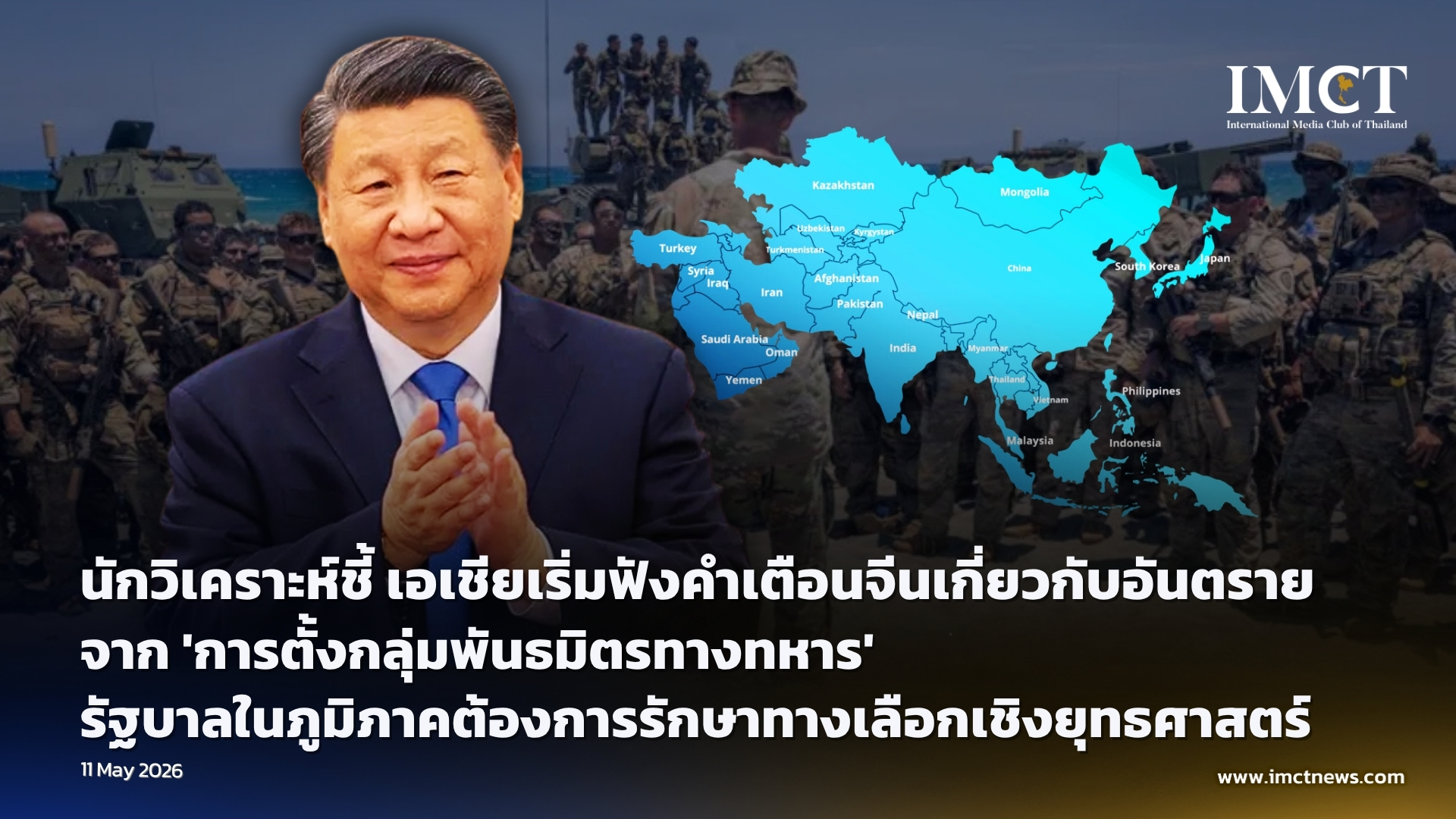
At present, BRICS consists of Brazil, Russia, India, China, South Africa, Iran, Saudi Arabia, UAE, Egypt and Ethiopia. Several dozen countries, particularly from Asia and Africa, have expressed their desire to join the economic bloc in order to diversify their economic and financial interests. The BRICS leaders will have to determine whether they want to bring in as many new members as possible to increase the bloc’s bargaining power, or whether they prefer to go step by step in adding new members as deemed necessary.
Nonetheless, becoming part of BRICS will necessitate Thailand or any other member countries to mount on a reform to bring their financial and economic fundamentals in line with the overall BRICS’s objectives, one of which is to move away from US dollar domination. BRICS encourages the member countries to trade with each other in their own national currencies. This will not only bring down financial costs but also reduce foreign exchange risks associated with using a third-party currency, namely the US dollar. Russia and China are now trading with each other almost 95% in their national currencies.
Going forward, the BRICS countries will turn their back against a fiat currency regime and adopt a gold-backed or commodities-backed currency instead. Sound money will help the BRICS countries stabilize prices in an environment of high inflation as the fiat currency regime, dominated by the US dollar, is facing a potential collapse from rampant money printing and runaway debt creation.
Moreover, BRICS will make an announcement of some sort to create a common currency, which will potentially serve as a global reserve currency. This will require an establishment of an international financial institution similar to the International Monetary Fund. The BRICS common currency will be backed by two basket of currencies — one consisting of the national currencies of the participating countries and the other comprising the commodities such as gold, silver, oil, natural gas, wheat, uranium and other natural resources. However, it will take time before the BRICS common currency may come into being as, apart from the technical issues, it will require a strong political will from all the stakeholders to push for its creation.
So what will Thailand need to do or what benefits it will gain by joining the BRICS?
First, Thailand will be able to use the baht to trade directly with the other BRICS countries, without having to rely on the US dollar, hence reducing the financial costs and foreign exchange risks.
Second, the baht will terminate its fiat currency status to become sound money after it is backed by gold or other commodities as stipulated by the BRICS membership. Thailand is rich with natural resources, from oil and natural gas reserves to gold and rice, which can be used to back the baht. Sound money will help tackle inflation and restore macroeconomic stability.
Third, the Bank of Thailand will have to cut back its reserves in dollar, euro, yen or other fiat currencies and add reserves in the currencies of the BRICS countries instead by either buying up the BRICS bonds or entering currency swap agreements.
Fourth, BRICS membership will further open up trade and investment opportunities for Thailand, which will benefit from trading with the fast-growing economies.
Fifth, Thailand will be in a position to acquire cheap energy resources from the BRICS countries, including Iran, Saudi Arabia or Russia.
Sixth, as a member of BRICS, Thailand will have more room in maneuvering its foreign policy in a more balanced fashion amid growing pressure from the superpowers to put Thailand under their wings.
The world is changing. The BRICS gives a fresh air of hope for a better world through equitable cooperation and partnership. Thailand will have everything to gain from becoming its member. And there is no turning back.
By Thanong Khanthong, Editor
IMCT News